Blog Archives

Research Article: Equitable Food Value Chains through Collaborative Action

Food system practitioners and scholars are increasingly interested in applying collective and place-based efforts to create equitable food systems. How well do such efforts work? A team from the UB Food Lab, led by Dr. Micaela Lipman, explores this question in a paper about Buffalo, NY. Drawing on com­munity coalition action theory (CCAT), the authors explore the potential for enhancing food equity through collaborative action across the food value chain. Through a case study of a collaborative initi­ative to promote equitable food systems, they document the possibilities and pitfalls of collabo­rative, cohort-based efforts within the inequitable landscape of Buffalo, New York (NY). The paper relies on mixed-methods data that include key informant interviews, participant observations, and surveys of organizations that participated in the Buffalo Community Food System Grant program. Corroborating prior research, the authors report that initia­tives that seek to foster collective action offer unique possibilities for food equity, as well as some key limitations, especially within the context of a racialized food environment. Strengthening food systems by investing in relationships across food value chains opens new avenues for collec­tive action. To promote food equity, new forms of collective action, including functional relationships across the value chain, must address deeper struc­tural imbalances in the food system, such as those resulting from structural racism.

Article is open access and available through JAFSCD.

Citation: Lipman, M., Griffin, D., Woyciesjes, E., Hall, G., & Raja, S. (2025). Equitable food value chains through collaborative action [in an inequitable landscape]: Insights from Buffalo, New York. Journal of Agriculture, Food Systems, and Community Development14(1), 207–226. https://doi.org/10.5304/jafscd.2025.141.019
Students and community partners co-produce Growing Toward Equity report to strengthen urban agriculture on Buffalo’s East Side

As long as cities have existed in the United States, there have been residents growing food for sustenance. But agriculture is not only a source of survival, it is a site of resistance. Particularly for Black communities in the United States, the process of caring for and cultivating the land is seen as a liberatory act. Urban agriculture, when employed in pursuit of equity, has the potential to stabilize neighborhoods, improve public health, and address food apartheid within cities. A planning report co-produced by graduate students (at the University at Buffalo), community partners (Juneteenth Agricultural Pavilion in Buffalo, NY), and policy partners (County of Erie, NY) illustrates how urban agriculture can be used as a lever for advancing equity.

The report Growing Toward Equity aims to:

1. Promote and help sustain equitable urban agriculture in East Side neighborhoods; especially grounded in ideas, histories, and practices of Black growers.

2. Gather, analyze, synthesize, and provide information about urban agriculture.

3. Develop local government policy and planning strategies for the protection and expansion of urban agriculture.

The report will be of interest to community educators and food system educators interested in working together to advance food equity. Production of the report was supported by Growing Food Policy from the Ground Up project, Foundation for Food and Agricultural Research (FFAR), UB Food Lab, and its partners.


Event | Juneteenth | June 19, 2024

UB Food Lab celebrated Juneteenth at the Juneteenth Agricultural Pavilion last week.
Revisiting a piece by the UB Food Lab team titled “Sustenance, Resistance, and Revolution
Black Women and Food Justice” on Juneteenth.
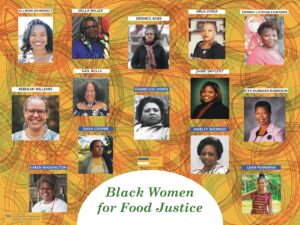
Black women have used, controlled, and shaped food spaces to their families’ and communities’ advantage for hundreds of years in the United States. From the first enslaved women brought to New Amsterdam in 1619 to women today, powerful Black women have used food as a lever for social transformation. Black women’s food-related agency has spanned from the kitchen table to policy circles, though this agency is often overlooked in research, policy, and popular discourse. This Juneteenth we reflect on the historic contributions and present-day work of Black women to advance food justice in East Buffalo and beyond.  Read the full article here.

Planning for Equitable Urban Agriculture: Future Directions for a New Ethic in City Building

“Planning for Equitable Urban Agriculture: Future Directions for a New Ethic in City Building”: A book in honor of Food Systems Planning scholar, teacher, and advocate- Jerome Kaufman; (Jerry) Kaufman (1933-2013). The book explores the potential and pitfalls of planning for urban agriculture, provides case studies from cities across the United States, and documents the state-of-art in municipal planning practice, research, and teaching tied to planning for urban agriculture. Cities featured in the book include Albany (GA), Baltimore, Buffalo, Chicago, Denver, Detroit, Cleveland, NYC, Seattle, and others.

An emeritus professor at the University of Wisconsin-Madison and a founding member of the APA Food Interest Group (now APA FOOD), Jerry blended the roles of activist, practitioner (of planning), scholar, and teacher throughout his professional life. Principles of fairness and justice were a central tenet of Jerry’s life and work. Jerry wrote about urban education and race, central city planning, gender in planning, ethics — and, later in his life, food systems. During his lifetime, Jerry did not publish writings that explicitly connected planning ethics with planning for food systems, though there is plenty of evidence that this link nourished his scholarship, teaching, and actions on food systems.
The editors of the book surmise that Jerry’s early preoccupation with planning ethics influenced his openness toward food systems, a topic that was largely overlooked in formal urban and regional planning practice. Now, more than 50 individuals – many of whom he trained and worked with – celebrate his legacy by exploring questions of ethics and food systems in this new book. Chapters are written by teams of scholars, planning practitioners, and community advocates to provide a rounded view.

 The book is open access and can be accessed here:

https://link.springer.com/book/10.1007/978-3-031-32076-7

Co-editors are: Marcia Caton Campbell, Alexandra Judelsohn, Branden Born, and Alfonso Morales.

Authors and contributors to the “Kaufman Book” include: Shantell Bingham, Sarah Buzogany, Laine Cidlowski, AICP, Abby Cocke, Nevin Cohen, Nick DeMarsh, Tanya Denckla Cobb, Jill Clark, Holly Freishtat, Emmanuel Frimpong Boamah, Kelsey Gosch, Domonique S. Griffin, MUP, Kimberley Hodgson, MURP, MS, AICP, RD, Sylvia Kelly, Gabriella Hall, Enjoli Dominique Hall, Aiden Irish, Ph.D., Sydney Jones, Micaela Lipman, Kami Pothukuchi, Yeeli Mui, Subhashni Raj, PhD, Carol E. Ramos-Gerena, Anusuya Rangarajan, Molly Riordan, Wayne Roberts, Shirley Sherrod, Avery Q. Sirwatka, Kristopher Walton, MUP, Alexander J. Wright JD, Domenic Vitiello, and others.

The Preface for the book is written by Professor Emeritus Beth Howe and Jerry’s son, writer Dan Kaufman.


News | Op-ed: East Buffalo Needs Community-Driven Structural Investments, Not Fly-In, Fly-Out Charity | May 24, 2022

Op-ed: East Buffalo Needs Community-Driven Structural Investments, Not Fly-In, Fly-Out Charity

East Buffalo is full of existing Black-led groups working to feed and care for its residents in the aftermath of the massacre. And they’ll be doing the same long after the news media has moved on.


Mourners light candles at a makeshift memorial outside of Tops market on May 16, 2022 in Buffalo, New York.

Photo credit: Scott Olson, Getty Images


Event | National Planning Conference | April 13, 2024

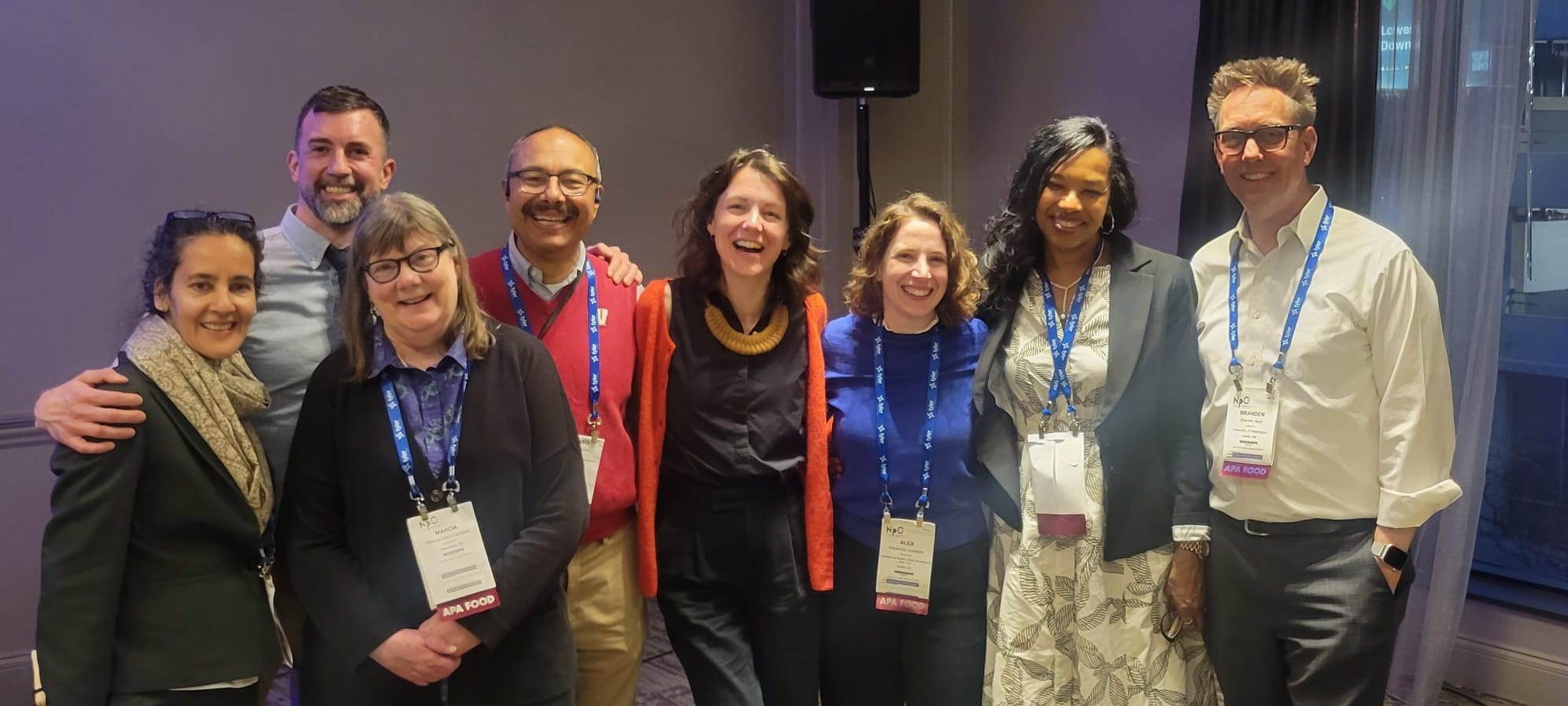
Reunion for equity! The extended Food Lab family of team members, alums, and partners (including American Planning Association (APA) Food Division, University of Wisconsin Madison, University of Washington, Urban Fruits & Veggies) were at the 2024 American Planning Conference in Minneapolis, arguing for centering equity in planning for urban agriculture. The events built on and celebrated the legacy of Jerry Kaufman, the father of food systems planning.
Speaking to a packed house in two back-to-back events attended by more than 200 people, Branden Born, Allison Piggery DeHonney, Marcia Caton Campbell, Domonique Griffin, Alexandra Judelsohn, Ben Kerrick, Alfonso Morales, Najahla Olumiji, Samina Raja, Molly Riordan, and partners urged planners to pay attention to ethics in food systems planning – and really, in all planning.
Stellar research and design work done by UB Food Lab students, Kate Hayes and Zane Longwell.

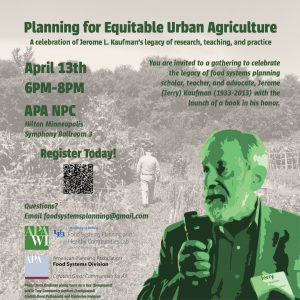
Event | New Book Launch: Planning for Equitable Urban Agriculture: Future Directions for a New Ethic in City Building” in honor of food systems planning scholar, teacher, and advocate- Jerome Kaufman | April 13, 2024

New Book Launch: UB Food Systems Planning and Healthy Communities Lab is delighted to announce the publication of a new book “Planning for Equitable Urban Agriculture: Future Directions for a New Ethic in City Building” in honor of food systems planning scholar, teacher, and advocate, Jerome (Jerry) Kaufman (1933-2013). The book explores the potential and pitfalls of planning for urban agriculture, provides case studies from cities across the United States, and documents the state-of-art in municipal planning practice, research, and teaching tied to planning for urban agriculture. Cities featured in the book include Albany (GA), Baltimore, Buffalo, Chicago, Denver, Detroit, Cleveland, NYC, Seattle, and others.

An emeritus professor at the University of Wisconsin-Madison and a founding member of the APA Food Interest Group (now APA FOOD), Jerry blended the roles of activist, practitioner (of planning), scholar, and teacher throughout his professional life. Principles of fairness and justice were a central tenet of Jerry’s life and work. Jerry wrote about urban education and race, central city planning, gender in planning, ethics — and, later in his life, food systems. During his lifetime, Jerry did not publish writings that explicitly connected planning ethics with planning for food systems, though there is plenty of evidence that this link nourished his scholarship, teaching, and actions on food systems. The editors of the book surmise that Jerry’s early preoccupation with planning ethics influenced his openness toward food systems, a topic that was largely overlooked in formal urban and regional planning practice. Now, more than 50 individuals – many of whom he trained and worked with – celebrate his legacy by exploring questions of ethics and food systems in this new book. Chapters are written by teams of scholars, planning practitioners, and community advocates to provide a rounded view.

Samina Raja: We hope that the book will be informative for city governments (and policymakers and planning staff) who are aiming to create policy landscapes to support equitable urban agriculture.
Thank you to my fellow co-editors, the 50+ contributors, and hundreds of supporters who made this book possible in Jerry’s honor.

BOOK RECEPTION. You are invited to a book launch reception honoring Jerry Kaufman at the National American Planning Association conference on April 13, 2024. Registration is required (https://lnkd.in/gcrAFis8).

BOOK ACCESS. Thanks to the generosity of multiple funders, including the Foundation for Food and Agricultural Research, University at Buffalo, the University of Wisconsin-Madison, University of Washingtom-Seattle, WNY Foundation and others, the book
is Open Access and can be downloaded from the publisher’s website at: https://link.springer.com/book/10.1007/978-3-031-32076-7.

QUESTIONS? Reach out to the APA FOOD Division at [email protected].

We Want to Eat and be Healthy just like Everybody Else:” How Social Infrastructures Affect Nutrition Equity in a Racialized Urban Community in the United States

New article alert: “We Want to Eat and Be Healthy Just Like Everybody Else:” How Social Infrastructures Affect Nutrition Equity in a Racialized Urban Community in the United States.

Authors: Gabby Headrick, Kiera Abdul, Shireen Guru, Allison DeHonney, Alyssa J. Moran, Pamela J. Surkan, Samina Raja, Yeeli Mui.

In this article in ELSEVIER, the authors describe how the use of social infrastructures impacts food security and nutrition equity in a majority Black and urban community in the United States.

Sustained, community-led investment is needed to address structural inequities preventing the advancement of nutrition equity. Social infrastructures should be expanded to support low-income populations inclusively, so wealth generation is possible to address the root cause of food insecurity.

Semistructured in-depth interviews were conducted with 40 low-income, urban, and predominately Black people living in Buffalo, New York in May–July 2022. A thematic analysis using a phronetic iterative approach informed by the Social Ecological Model, Walsh’s Family Resilience Framework, and a framework focused on the advancement of nutrition equity.

Read the full published article here.

Event | For/From: Considering Origins – Spring 2024 Public programs at Hayes Hall | Feb 14, 2024

Dr. Samina Raja, founder and director of the UB Food Lab, will deliver a lecture, “Dis)entangling research(ers) from/in place,”
on Feb 14, 2024 at 6:00 PM. The lecture kicks of the school’s public program series at the School of Architecture and Planning – University at Buffalo for spring 2024.
_________________________________________
Description of lecture: The theorist and economist Amartya Sen challenges the idea of identity as a solely emergent object. He argues identity constitutes three parts — individual, perceived (by others), and socially engaged (in a particular context) — and that identity is the result of reasoned choices subject to some (minimal) constraints. Drawing on Amartya Sen’s work, in this lecture, Samina Raja reflects on the importance of the identities of planners in making and unmaking spaces and places. For whom do they research, and from where do they draw their frames of inquiry? The identities of the researcher influence the relevance of their research, the rigor of their research, and, ultimately, urban planning as a field of inquiry and practice. Raja will draw on examples of food systems research in the cities of Buffalo (United States) and Srinagar (Jammu & Kashmir) to discuss the epistemological possibilities and challenges of researchers’ positionality vis-a-vis particular places, times, and people. In doing so, she explores the ethical dilemmas researchers encounter when entering, residing, and researching in, and often exiting the places of their planning and design inquiry and practice — places where they may belong or unbelong by virtue of their identities.
_________________________________________
Join UB in Hayes 403

Mapping the invisible: Bridging and trusting networks in sustaining the urban food systems

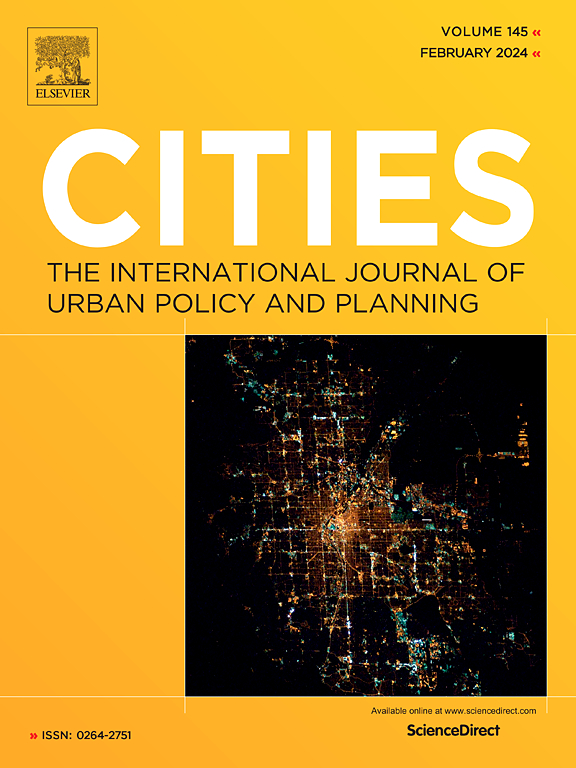
In this new article titled “Mapping the invisible: Bridging and trusting networks in sustaining the urban food systems” in CITIES, ElSEVIER, Dr. Emmanuel Frimpong Boamah and colleagues share five key insights about Buffalo’s food systems:

  • Buffalo’s food system mostly comprises a close-knit network of local grassroots organizations
  • The network has a ‘small world’ effect showing a short chain of actors linking all actors
  • Food advocacy, information sharing, and high levels of trust help sustain and reproduce the network
  • Few actors serve as resource and information hubs and brokers within the network
  • The network tells a story of local self-reliance and co-production among urban growers and grassroots organization

The article makes visible the social network infrastructure of people sustaining the urban food system in the post-industrial city of Buffalo, NY. It does so by probing how networks are launched and sustained over time, who is responsible for the networks, and to what end. The authors employ a survey to collect data on social networks among actors within the city’s food system. The findings suggest that Buffalo’s urban food system is a constellation of close-knit networks comprised primarily of local grassroots organizations having ‘small world’ effects— that is, short chains of actors within the network link all actors. These central actors rely on their high levels of trust and shared beliefs and vision to socially reproduce, sustain, and strengthen their urban food system through advocacy and information sharing. In sum, we find that Buffalo’s food system story is one of local self-reliance, co-production, and co-dependency among urban growers and other grassroots actors whose day-to-day practices and lived experiences are largely excluded from the municipal government’s policies and decisions.


Read the full article here: https://www.sciencedirect.com/science/article/pii/S0264275123005620